COMU
An AI front desk for wildlife rescue. Someone finds a hurt animal; COMU asks what it is, what's wrong and where they are, then gives safe next steps or the right number to call.
- Built for
- Wetlands & Wildlife Care Center of Orange County
- My role
- Volunteer developer: design, training, the whole stack
- Models
- Four fine-tuned Qwen3.5-9B specialists
- Name
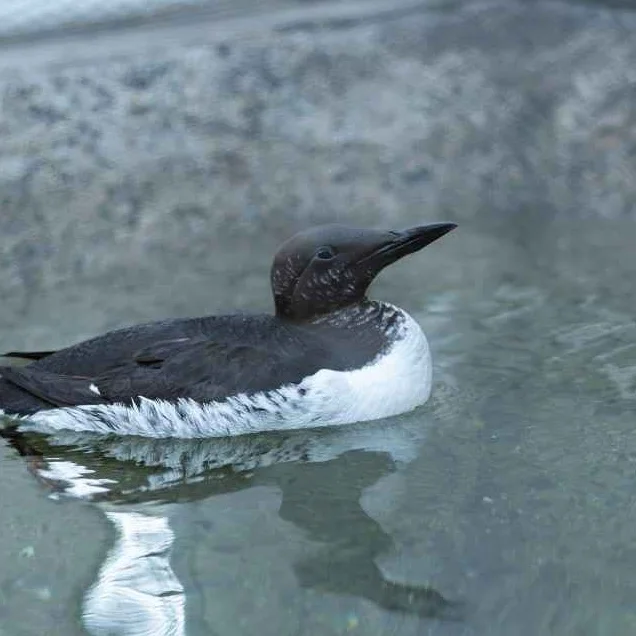
- After the Common Murre, a seabird
Results
Beats the base model
On 16 real triage cases from the care center, the fine-tuned specialists passed 62% to the base model's 25%, and never once made up a phone number. The base model invented eight.
- 0
- hallucinated phone numbers (base model: 8)
- 62%
- pass rate on real triage cases (base: 25%)
- 90.3%
- right care group from a photo
- 381 ms
- median time to identify a photo
How it works
Four specialists
A fallen nestling and a seal on the beach need different answers, so COMU is four models, not one.
Four specialists
Birds, mammals, reptiles, marine: one LoRA each, picked per request.
Can't invent numbers
Referrals come from a directory; a guardrail strips anything else mid-stream.
Photo ID
Send a picture, get the species and care group.
Front-desk ready
Emergency fast path, tap-to-call, voice, English and Spanish.
Staff console
Conversations, knowledge, referrals and a queue of unanswered questions.
Runs anywhere
FastAPI + LangGraph on llama.cpp; no database needed.
Training
Trained at home
- Base model
- Qwen3.5-9B
- Fine-tuning
- Unsloth QLoRA, one adapter per specialist, on data grounded in the care center's own material
- Serving
- A Q4_K_M GGUF base with per-specialist LoRA GGUFs on llama-server
- Backend
- FastAPI, LangGraph, Postgres or a zero-setup JSON store
- Front end
- An embeddable chat widget and a staff admin console
It started from Ornimetrics: the same vision pipeline that recognises birds at the feeder now helps the care center's rehabilitation staff log their observations.